
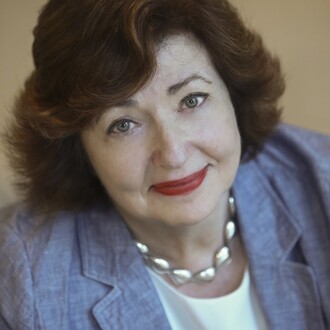
Martha P. Nochimson is an American film critic, writer, and scholar whose work explores film, television, narrative theory, and the creative vision of major auteurs. She is best known for her extensive writings on David Lynch, as well as her studies of soap opera, The Sopranos, and the broader landscape of auteur television.
Martha P. Nochimson began her academic life in English and American literature, teaching those subjects before film studies reshaped her professional direction. As she recalls, “While I was making plans for other things, film and media studies found me,” a shift she traces to a birthday gift from her young son: Tania Modleski’s The Women Who Knew Too Much. This moment redirected her career and led her toward an evolving engagement with film theory and screen culture.
Her academic posts have included teaching at the Tisch School of the Arts at New York University and founding the film program at Mercy College, where she later served as its first Chair. Through these roles, she became a central figure in expanding film education while developing her own long-form critical work.
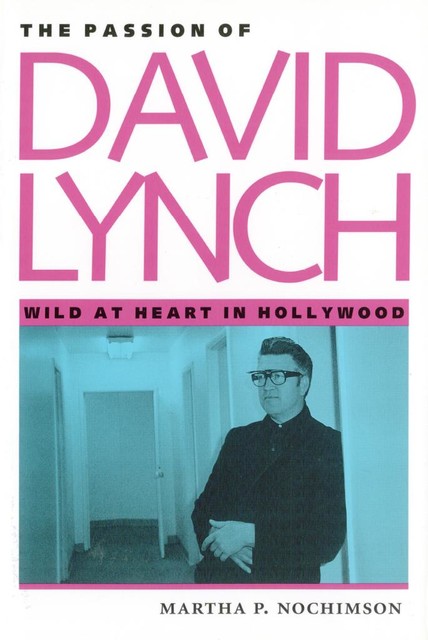
Nochimson is the author of numerous books that map her intellectual trajectory. Her early work, No End to Her: Soap Opera and the Female Subject (1993), examined melodrama and gender. She turned decisively toward Lynch studies with The Passion of David Lynch: Wild at Heart in Hollywood (1997), which argued that his films were driven by subconscious processes.
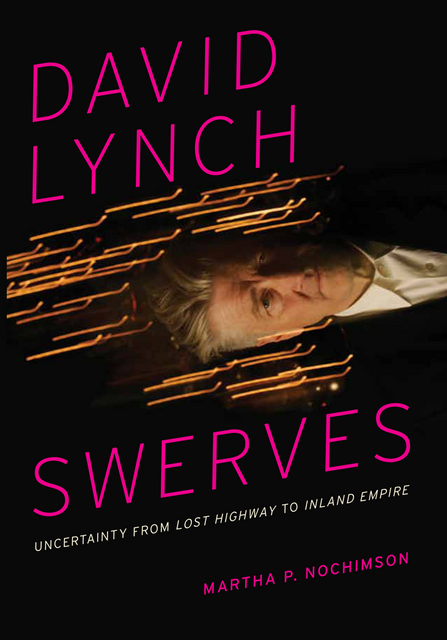
Her follow-up, David Lynch Swerves: Uncertainty from Lost Highway to Inland Empire (2013), identified a major shift in the director’s aesthetics, exploring how quantum physics and Vedic philosophy began to shape his narratives.
Her more recent book, Television Rewired: The Rise of the Auteur Series (2019), expanded her focus to television. It traces how Twin Peaks reshaped contemporary TV and influenced creators like David Chase and David Simon, a phenomenon she terms “The David Effect.” The book culminates in an analysis of Twin Peaks: The Return, which she presents as a modern epic rooted in the Unified Field of Consciousness, a concept crucial to her reading of Lynch’s evolving vision.
Nochimson has also written A Companion to Wong Kar-wai (2016); An Introduction to Film Genres (2013, co-authored); World on Film (2010); Dying to Belong (2007); and Screen Couple Chemistry (2002). Across these works, she continues to argue for a form of criticism grounded in curiosity, openness, and what she calls “the spirit that leads to the many.”
Martha P. Nochimson still lives in New York.
Photo credit: www.marthapnochimson.com
Martha P. Nochimson began her academic life in English and American literature, teaching those subjects before film studies reshaped her professional direction. As she recalls, “While I was making plans for other things, film and media studies found me,” a shift she traces to a birthday gift from her young son: Tania Modleski’s The Women Who Knew Too Much. This moment redirected her career and led her toward an evolving engagement with film theory and screen culture.
Her academic posts have included teaching at the Tisch School of the Arts at New York University and founding the film program at Mercy College, where she later served as its first Chair. Through these roles, she became a central figure in expanding film education while developing her own long-form critical work.
Nochimson is the author of numerous books that map her intellectual trajectory. Her early work, No End to Her: Soap Opera and the Female Subject (1993), examined melodrama and gender. She turned decisively toward Lynch studies with The Passion of David Lynch: Wild at Heart in Hollywood (1997), which argued that his films were driven by subconscious processes.
Her follow-up, David Lynch Swerves: Uncertainty from Lost Highway to Inland Empire (2013), identified a major shift in the director’s aesthetics, exploring how quantum physics and Vedic philosophy began to shape his narratives.
Her more recent book, Television Rewired: The Rise of the Auteur Series (2019), expanded her focus to television. It traces how Twin Peaks reshaped contemporary TV and influenced creators like David Chase and David Simon, a phenomenon she terms “The David Effect.” The book culminates in an analysis of Twin Peaks: The Return, which she presents as a modern epic rooted in the Unified Field of Consciousness, a concept crucial to her reading of Lynch’s evolving vision.
Nochimson has also written A Companion to Wong Kar-wai (2016); An Introduction to Film Genres (2013, co-authored); World on Film (2010); Dying to Belong (2007); and Screen Couple Chemistry (2002). Across these works, she continues to argue for a form of criticism grounded in curiosity, openness, and what she calls “the spirit that leads to the many.”
Martha P. Nochimson still lives in New York.
Photo credit: www.marthapnochimson.com
Books
- unavailable

- unavailable
fb2epub
Drag & drop your files
(not more than 5 at once)