
Books
Read in our apps:
iOS
·Android
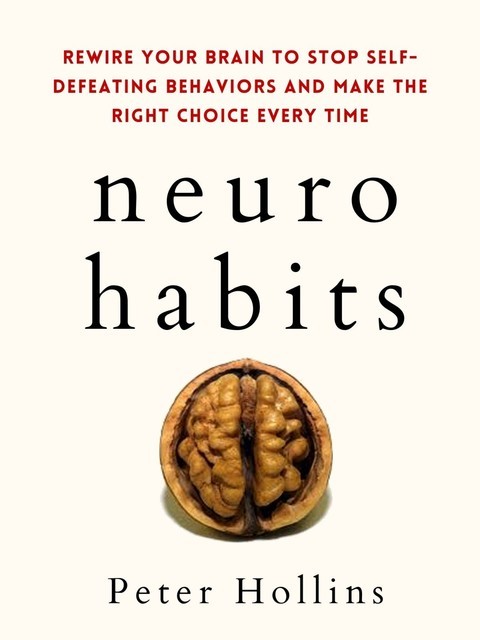
Neuro-Habits
- About
- Quotes26
- Readers31
- Related books
- mishiareeze077has quoted7 days ago
 In fact, many psychologists have noted that those who develop addictions often have low dopamine levels to start with, and may be so strongly attracted to drugs, alcohol, food, overspending, gambling or sex to bolster chronically flagging dopamine levels
 - mishiareeze077has quoted7 days agoRewards can be small—the feeling that things are right in the world, a sense of order or stability, a feeling of completeness and familiarity.
- mishiareeze077has quoted10 days agoRewards can be small—the feeling that things are right in the world, a sense of order or stability, a feeling of completeness and familiarity.
- mishiareeze077has quoted10 days agoneuroplastic brain is one that can change. It’s the reason you were able to develop bad habits in the first place; but it’s also the reason you’ll be able to break them and form new, more beneficial habits.
- nnattalija9has quoted5 months ago
 , to build habits, we need to create the environment that triggers those habits.
 - nnattalija9has quoted9 months agoIf we hope to make new habits, we need to make sure we’re mimicking the natural process of habit formation, and designing precisely the situations that will lead a habit to form.
- nnattalija9has quoted9 months agoYou could theoretically perform an action every day but, until it is done consistently and automatically in response to a trigger, it’s not really a habit, it’s just something you’ve managed to force yourself to do repeatedly.
- nnattalija9has quoted9 months agoThis is the three-part habit loop we briefly explored in the previous chapter. So, there are two crucial things needed for a habit to form:
The behavior needs to be repeated regularly (not necessarily daily, but often) and it needs to be uniform, i.e. done the same way every time.
There needs to be an association between the trigger or specific environment and the resulting behavior. - nnattalija9has quoted9 months agoHabits are repeated, learned behaviors, but they have neurochemical and physiological correlates in the brain.
- nnattalija9has quoted9 months agoIn other words, our perceptions of pleasure and pain are really what drive the car. And sometimes those perceptions can be flawed. In fact, they are mostly flawed, which explains our tendency to work against our own best interests.
fb2epub
Drag & drop your files
(not more than 5 at once)