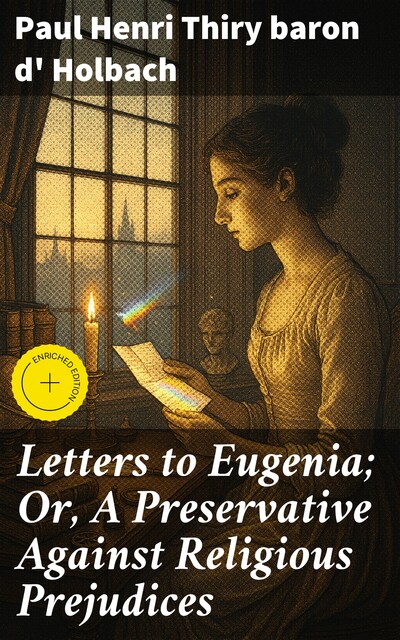
In “Letters to Eugenia; Or, A Preservative Against Religious Prejudices,” Paul Henri Thiry baron d'Holbach eloquently contends against the dogmas of religion, advocating for rational thought and secular morality. Written in an epistolary format, the text employs a conversational and didactic style that combines philosophical rigor with personal reflection, making complex Enlightenment principles accessible to a broader audience. D'Holbach situates his arguments within the broader context of 18th-century Enlightenment thought, reinforcing the necessity of reason and empirical evidence over superstition and religious authority. Baron d'Holbach, a prominent Enlightenment thinker known for his materialistic worldview, was heavily influenced by the intellectual currents of his time. As a well-connected figure in the Parisian philosophical circle, he championed atheism and free thought, often clashing with the prevailing religious ideologies. His life experiences, characterized by a commitment to reason and humanism, profoundly informed his writing, making “Letters to Eugenia” a pivotal work in the discourse surrounding religious skepticism and moral philosophy. This book is highly recommended for readers interested in the Enlightenment, atheism, and the ongoing debate between faith and reason. Through his insightful proposals, d'Holbach invites readers to critically examine their beliefs, making it a valuable text for anyone seeking a deeper understanding of the philosophy of religion and the importance of rational inquiry.
In this enriched edition, we have carefully created added value for your reading experience:
— A succinct Introduction situates the work's timeless appeal and themes.
— The Synopsis outlines the central plot, highlighting key developments without spoiling critical twists.
— A detailed Historical Context immerses you in the era's events and influences that shaped the writing.
— An Author Biography reveals milestones in the author's life, illuminating the personal insights behind the text.
— A thorough Analysis dissects symbols, motifs, and character arcs to unearth underlying meanings.
— Reflection questions prompt you to engage personally with the work's messages, connecting them to modern life.
— Hand‐picked Memorable Quotes shine a spotlight on moments of literary brilliance.
— Interactive footnotes clarify unusual references, historical allusions, and archaic phrases for an effortless, more informed read.